What Types of Scars Can Be Treated?
We treat a range of scar types, including:
- Post-operative scars — from surgical procedures, including caesarean sections or other operations.
- Trauma scars — caused by accidents, injuries, or burns.
- Hypertrophic scars — raised, red scars that stay within the boundaries of the original wound.
- Atrophic scars — indented scars, often seen after surgery or deep wounds.
- Mixed-type scars — with both raised and indented areas.
Our team assesses the scar’s type, age, size, and location during your consultation to recommend the most effective treatment plan.
How Does Laser Scar Removal Work?
At DR Surgical, we use fractional laser resurfacing technology to target scar tissue safely and effectively. The laser creates microscopic columns of controlled heat within the skin, encouraging the body’s natural healing response and stimulating collagen production. This helps:
- Smooth uneven texture
- Soften raised or thickened scars
- Reduce redness and pigmentation
- Improve flexibility in tight or restrictive scars
The procedure is tailored to your scar’s characteristics and skin type. Several sessions are usually recommended for optimal results, with visible improvement building over time.
What to Expect During Treatment
Laser scar removal is performed in-clinic with minimal downtime:
- The area is cleansed, and a topical anaesthetic may be applied for comfort.
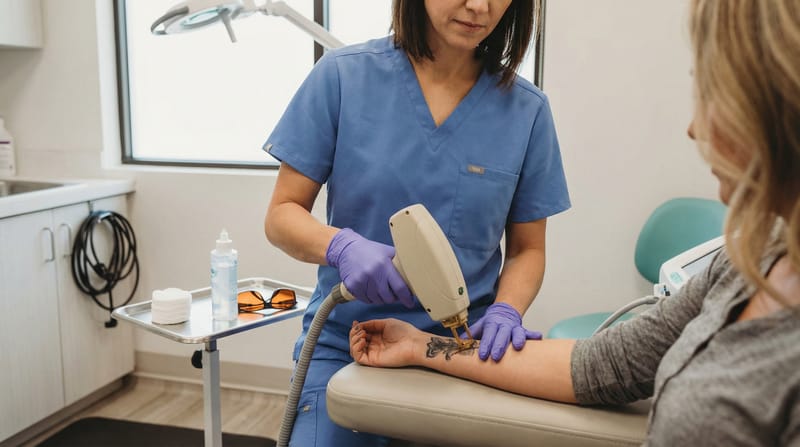
- The laser is passed over the scar, delivering precise energy to remodel the tissue.
- Treatment takes around 30–60 minutes depending on the size of the scar.
- You may experience redness, swelling, or mild sensitivity for a few days afterwards — similar to sunburn.
Our practitioners provide detailed aftercare guidance to support healing and protect your skin.
Why Choose Laser Resurfacing for Scars?
Laser resurfacing offers several benefits:
- Non-invasive treatment with no cutting or stitches
- Suitable for a wide range of scars and skin types
- Gradual, natural-looking improvement
- Minimal downtime compared to surgical scar revision
It’s important to note that while laser treatment significantly improves scar appearance, it does not erase scars completely. Our goal is to help scars blend more seamlessly with the surrounding skin and become less noticeable.
Aftercare and Recovery
Following laser scar removal, we provide full guidance on how to care for your skin, including:
- Using gentle cleansers and moisturisers
- Applying sun protection to prevent pigmentation changes
- Avoid harsh products or treatments on the area during healing
Most people can return to normal daily activities within 1–2 days, although redness and sensitivity may persist for several days depending on the depth of treatment.
Are There Any Risks?
Laser scar removal is a well-established, safe procedure when performed by experienced professionals. Possible side effects include:
- Temporary redness, swelling, or mild blistering
- Low risk of pigmentation changes, especially in darker skin types
- Rare risk of infection or scarring
Our practitioners carefully assess your skin type and scar characteristics to minimise risks and tailor the treatment appropriately.
Why Choose Derma Revive Surgical?
At Derma Revive Surgical, your safety and cosmetic outcome are our priorities. We provide:
- Honest, expert assessment of your scar and suitability for laser treatment
- Personalised treatment plans using advanced technology
- Clear aftercare support and follow-up
We understand that every scar has a story — and we’re here to help you feel more confident in your skin.